By FleetTracking.io Editorial Team · Updated 21 June 2026
What is trailer tracking?
Trailer tracking is the use of a dedicated tracking unit fitted to a trailer so its location and status can be monitored on its own, separate from the tractor unit pulling it. This matters because trailers rarely stay coupled to one cab. They are dropped at sites, swapped between drivers, parked in yards and left unattended for hours or days at a time. A tracker fixed to the cab tells you nothing once the trailer is uncoupled, which is exactly when most operators lose sight of their assets.
By placing a trailer tracker on the trailer itself, you keep continuous visibility of every unit in your fleet, whether it is in transit, sitting in a customer's yard or waiting to be collected. For any operator running curtainsiders, boxes, flatbeds, reefers or skeletal trailers, this is the difference between knowing where your equipment is and guessing.
Why trailer tracking matters for hauliers
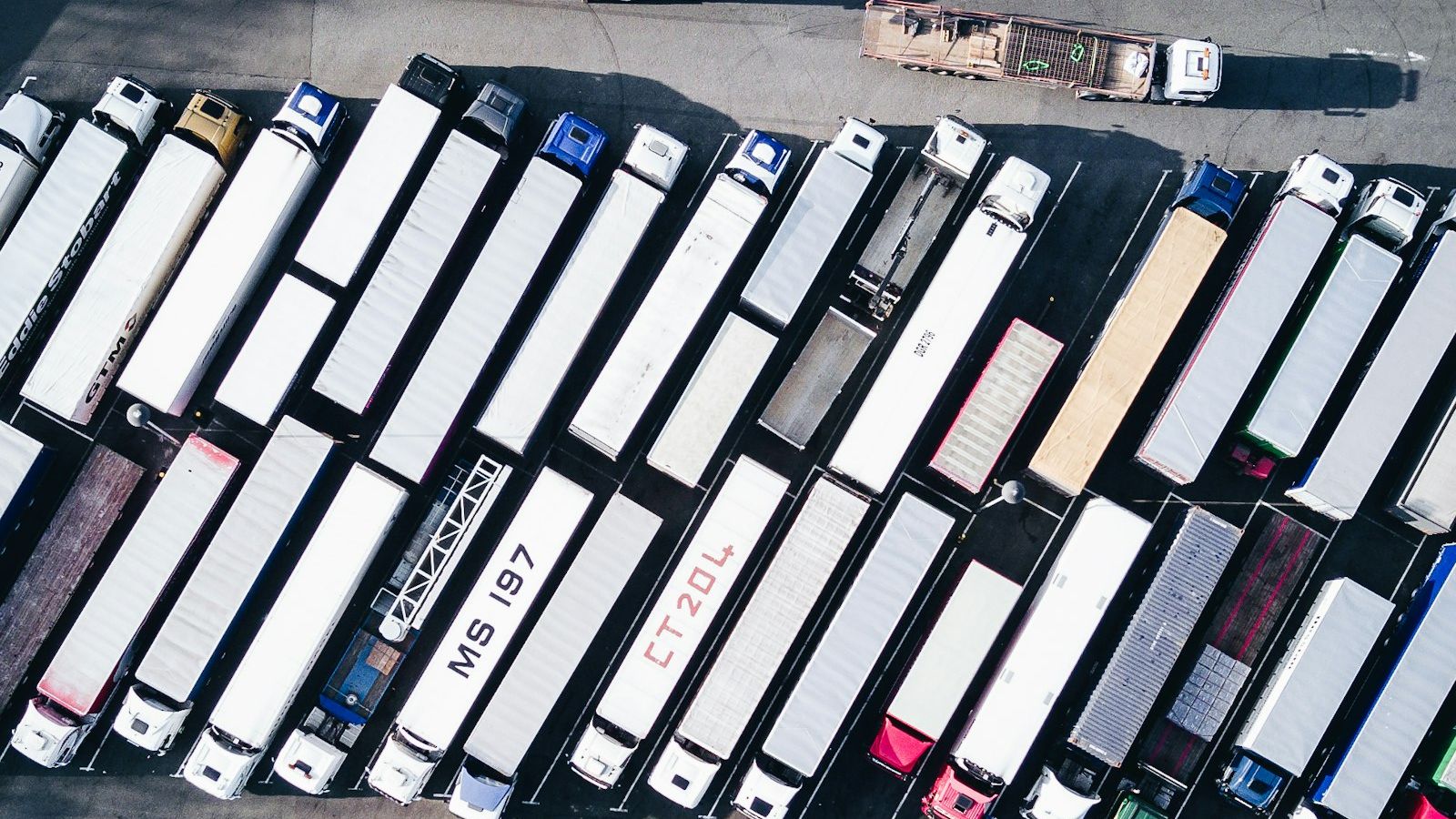
Trailers represent a large slice of capital, yet they are frequently the least visible part of a fleet. Drop-and-swap operations, trunking and multi-drop work all create gaps where a trailer is parted from its cab. HGV trailer tracking closes those gaps and gives operators hard data on where assets are, how long they sit idle and whether they are being used efficiently.
The same visibility supports security. Unattended trailers are a known target for theft, and recovering a stolen unit and its load is far quicker when you can pinpoint its location. Trailer tracking is a core part of fleet-wide asset tracking, bringing every trailer into the same operational picture as the rest of the business.
How trailer tracking works
The key challenge is power. Unlike a cab, a parked trailer often has no live electrical supply, so trailer trackers are designed to run independently for long periods. Most fall into one of a few categories:
- Battery-powered units: self-contained trackers with long-life batteries that report position on a set schedule. Designed to last years between changes, they preserve power by reporting periodically rather than constantly.
- Solar-assisted units: trackers with a small solar panel that tops up the internal battery, extending life further and suiting trailers that spend time outdoors.
- Hardwired units: where a trailer has a suitable supply, the tracker can be wired in to draw power directly, allowing more frequent reporting and the option to add sensors.
Units communicate over the mobile network and plot each trailer on an online platform or app. Reporting frequency is usually configurable, so you can balance how often a trailer checks in against how long the battery lasts. Many units also send an alert if a trailer moves unexpectedly or leaves a defined area.
The benefits of trailer tracking
Beyond simply knowing where a trailer is, tracking delivers measurable operational gains:
- Locating drop trailers: find any parked or dropped trailer instantly instead of phoning round sites or sending a driver to look.
- Improved utilisation: see which trailers are working and which are sitting idle, so you can right-size the fleet and avoid buying or hiring units you do not need.
- Reduced loss and theft: movement alerts and accurate positioning help deter theft and speed up recovery of a stolen trailer and its load.
- Demurrage and standing-time visibility: records of how long a trailer dwells at a customer site give you the evidence to recover demurrage charges and challenge excessive standing time.
- Cold-chain monitoring: paired with temperature sensors, trailer tracking on reefers provides a record of in-transit temperatures to support compliance and protect perishable loads.
Key features to look for
Trailer trackers vary widely, so focus on the features that match how your fleet operates:
- Battery life: a long service life keeps maintenance low; check the expected life at your required reporting rate.
- Reporting frequency: the ability to set how often a unit checks in, and to increase it when a trailer is on the move.
- Geofencing and alerts: notifications when a trailer enters or leaves a site, or moves outside permitted hours.
- Sensor support: inputs for temperature, door, load or coupling status where you need more than position.
- Robust build: a weatherproof, tamper-resistant housing suited to harsh outdoor use and discreet mounting.
- Platform quality: a clear interface, useful reporting and integration with any systems you already run.
How to choose a trailer tracking system
Start with how your trailers are used. Fleets that drop and swap frequently need reliable self-powered units and strong geofencing, while temperature-controlled operations should prioritise sensor support. Consider the mix of trailer tracker types you need, as a fleet may benefit from battery, solar and hardwired units in different roles.
Weigh up the total cost, including hardware, fitting and any ongoing platform or connectivity fees, and check how installation is handled across a fleet of trailers. It is also worth confirming contract length, support arrangements and whether the system can scale as you add units. Because providers and pricing differ, comparing several suppliers is the most reliable way to find the right fit for your operation.
Trailer tracking at a glance
| Unit type | Power source | Best suited to |
| Battery-powered | Long-life internal battery | Drop trailers and yards with no power supply |
| Solar-assisted | Battery topped up by solar | Trailers regularly parked outdoors |
| Hardwired | Trailer electrical supply | Frequent reporting and sensor-based monitoring |
Ready to bring every trailer into view? Compare free, no-obligation quotes from up to 3 trusted suppliers using the form below and find the trailer tracking solution that fits your fleet.